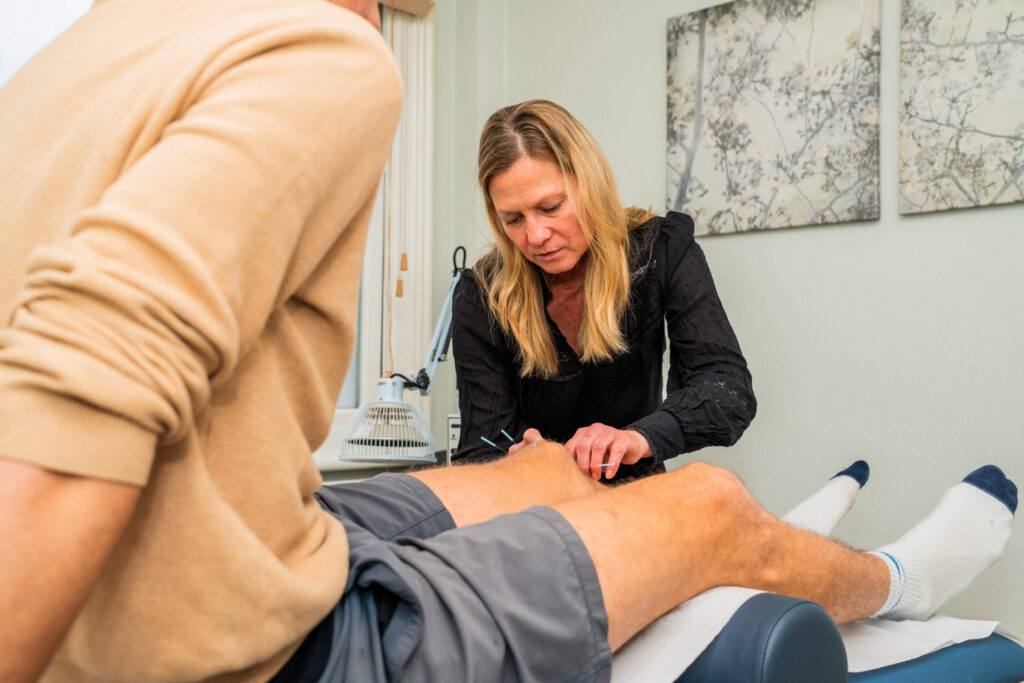
Written by Cath, Acupuncturist at White Hart Clinic
Acupuncture has been used for thousands of years, but how does it actually work? And what does modern science tell us about its effects?
To mark Acupuncture Awareness Week, we’re taking a closer look at this traditional practice and exploring the science behind it.
From persistent pain to headaches and muscle tension, many people turn to acupuncture as part of their approach to managing symptoms. In this article, we explore the traditional principles behind acupuncture, what research tells us about how it may work, and what to expect from treatment.
An Individual Approach to Health
Acupuncture originates in traditional Chinese medicine (TCM), which views health as a state of balance within the body. In this tradition, Qi (pronounced chee), often described as the body’s vital energy, is believed to flow through pathways known as meridians. When this balance is disrupted, symptoms may arise.
Acupuncture traditionally aims to restore this balance by stimulating specific points on the body. Treatment is tailored to the individual, considering not only their main symptoms but also their general health, lifestyle and wellbeing.
These concepts form part of the traditional understanding of acupuncture. Modern scientific research, meanwhile, has focused on how acupuncture may influence the nervous system, pain processing and other physiological responses.
What Happens in the Body?
Modern research is helping us better understand how acupuncture may work. Studies suggest that stimulating acupuncture points activates sensory nerves, sending signals to the spinal cord and brain. These signals may influence how the nervous system processes pain and regulates other bodily responses.
What does the research suggest acupuncture may help with?
- Managing specific types of pain
- Acupuncture may influence the body’s natural pain-modulating systems, including the release of substances such as endorphins, which play a role in pain regulation. Research suggests it can be beneficial for some persistent pain conditions and headaches, although the strength of evidence varies between conditions.
- Reducing muscle tension
- Some people experience a reduction in muscle tension and discomfort following acupuncture. This may be related to changes in pain perception and muscle activity, although the precise mechanisms are not yet fully understood.
- Supporting relaxation
- Many people report feeling calmer and more relaxed during or after treatment. Acupuncture may influence the nervous system and the body’s response to stress, although the exact mechanisms are yet to be understood.
Scientists are continuing to investigate these effects. Acupuncture does not work in the same way for everyone, and it is not a cure-all, but research suggests it may be a useful option for managing certain symptoms.
What Does an Acupuncture Treatment Feel Like?
If you’ve never tried acupuncture, the thought of needles may feel daunting. In practice, acupuncture needles are extremely fine, much thinner than the needles used for injections. Most people experience little discomfort, although you may notice a brief sensation, tingling or a gentle ache around the needle.
Your first appointment will usually involve a discussion of your health, medical history and what you hope to achieve. Your practitioner will then select appropriate points and develop a treatment plan with you.
Many people find the experience deeply relaxing, with some even drifting off to sleep.
How Many Treatments Will You Need?
The number of treatments you may need depends on your individual circumstances, the nature of your symptoms and how long you have been experiencing them.
Some people notice a change after one or two sessions, while others will benefit more from a course of treatment, often starting with weekly appointments.
Your practitioner will review your progress and treatment plan as you go, adjusting the frequency of appointments according to your individual needs and response to treatment.
Could Acupuncture Help You?
People seek acupuncture for a variety of reasons, from pain and headaches to stress and other persistent symptoms. It can often be used alongside conventional medical care, offering an additional approach to managing symptoms and supporting quality of life.
The most appropriate treatment will depend on your individual circumstances, and a qualified practitioner can help you understand whether acupuncture may be suitable for you.
Ultimately, acupuncture is about more than the needles themselves. It’s about understanding your symptoms, considering your health as a whole, and developing a treatment approach tailored to you.
Celebrate Acupuncture Awareness Week with 20% Off!
To celebrate Acupuncture Awareness Week, two of our wonderful acupuncturists, Cath and Susanne, are offering 20% off your first acupuncture appointment at White Hart Clinic!
This special offer is available to anyone who hasn’t previously had acupuncture at our clinic, for appointments taking place between Monday 9th and Friday 13th November 2026.
To take advantage of the offer, simply quote AA20 at reception before your appointment.
Curious whether acupuncture could help you? Get in touch via email at info@whitehartclinic.co.uk or phone us on 020 8876 9897 to explore whether our highly skilled acupuncturists at White Hart Clinic can help.